Sunday 05 February 2012

Behind the scenes on The Search for Spock

Though Spock died in The Wrath of Khan, the ending of the film clearly set up the possibility that he would return. Scotty had been killed and brought back in “The Changeling”, McCoy in “Shore Leave”, so why could that not be the case with a Vulcan? Especially when that Vulcan wanted to direct.

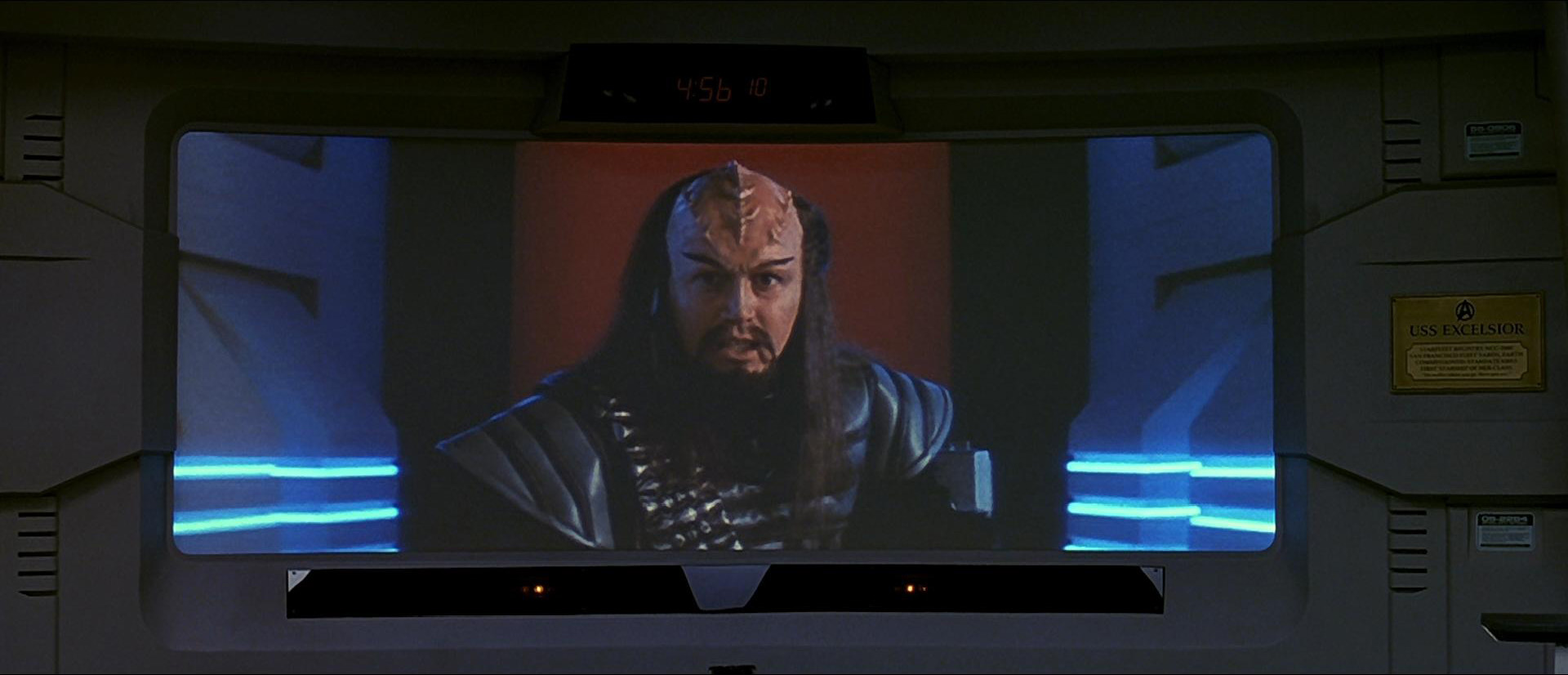
As a direct sequel to The Wrath of Khan, The Search for Spock was able to draw directly on what had been built for the earlier feature. This gave the production the equivalent of two films' worth of sets, costumes, and props, making the film much more visually interesting. Robert Fletcher's Starfleet uniforms remained the same. New Klingon costumes were required, but they followed the design he had established in The Motion Picture. At first, the script had called for Romulans to be involved in trying to track down the secrets of the Genesis Planet, but director Leonard Nimoy convinced producer Harve Bennett that Klingons were move theatrical. However, as the script was subsequently changed, the name of the villain's spaceship was not. Thus what was originally and logically a Romulan Bird-of-Prey became Klingon. Fortunately, Star Trek consistency is resilient enough to absorb some of these departures from what had gone before.

Industrial Light & Magic, which had done such a noteworthy job on visual effects for The Wrath of Khan, was once again asked to participate to this film. Not only did the company provide four new ships, it also became involved in the creation of props, including all the Klingon gear, and the ferocious dog-like creature kept by the Klingon commander.

The climatic destruction of the Enterprise near the end of the film was seen as an opportunity by some designers to move ahead with the development of a more sophisticated starship. But though the actual bridge set was blown up, the producers saved the large Enterprise model, destroying a smaller one instead.

For the first time, critical response to a Star Trek film improved significantly. Not all the reviews were raves, but many critics were finally taking the time to ignore their automatic reaction to the premise of a space movie based on a canceled television series, and to try to understand what gave Star Trek its appeal to so many dedicated followers. The Washington Post went as far as to say that he cast “are such agreeable, familiar old fixtures that you feel absurdly protective and tender about them.” USA Today said the film “strikes the best balance between story and effects, between characters and action, and between humour and melodrama.” And Time magazine's Richard Schickel said the movie “is the first space opera to deserve that term in its grandest sense.”

The third Star Trek film's opening weekend gross broke the record that had been set only a week before by Indiana Jones and the Temple of Doom, which itself had just broken the previous record set by The Wrath of Khan. There was no doubt about it—a fourth Star Trek film was inevitable.

Spacedock

One of the earliest scenes in the film showed the Enterprise docking at a large Spacedock facility in orbit of Earth. Spacedock was designed by David Carson and Nilo Rodis, and the model was built at Industrial Light & Magic. More information and photographs may be found at the “Earth Spacedock” page. Below four storyboards for The Search for Spock that depict the Enterprise entering Spacedock.


The Search for Spock would feature the destruction of the Enterprise in orbit of the Genesis Planet. The destruct sequence was previously used in the episode “Let That Be Your Last Battlefield” with Spock's command codes used in place of Chekov's. Below four storyboards that depict the destruction itself.


N. Ottens
20 June 2006

Sources for this article include:
• Reeves-Stevens, J. & G., The Art of Star Trek (1995)
Images courtesy of Trekcore.